

Tokyo's real estate market operates on a fundamental principle: proximity to train stations directly determines rental prices. Unlike car-dependent cities, Tokyo's reliance on public transportation creates a measurable relationship between station access and property values. Understanding this connection is essential for anyone renting or investing in Tokyo.
This guide explains how train station proximity affects rent, why certain lines command premium pricing, and how strategic location choices can deliver significant savings while maintaining practical access to Tokyo's employment centers.
Station Proximity: The Primary Rent Driver
The concept of 駅近 (ekichika), meaning "close to the station," represents the most powerful factor determining rental prices in Tokyo. Walking distance from an apartment to the nearest station creates clear, predictable rent variations.
The 5-7 Minute Premium Zone
Properties within 5-7 minutes walking distance of stations command the highest rental premiums. This proximity provides daily convenience during weather extremes, time efficiency that accumulates significantly over months, spontaneous accessibility for social activities, and consistently strong rental demand.
The premium for this proximity typically adds ¥30,000-¥80,000 monthly compared to similar apartments 10-15 minutes from the same station.
The 10-15 Minute Transition Zone
Walking distance beyond 10 minutes creates noticeable rent reductions. This range works well for remote workers, residents prioritizing space over convenience, and budget-conscious renters willing to trade walking time for lower costs.
Rent reduction at this distance: ¥20,000-¥50,000 monthly compared to the premium zone.
Beyond 15 Minutes: Significant Savings
Properties more than 15 minutes from stations experience substantial rent reductions - often ¥50,000-¥100,000+ monthly compared to nearby locations. These suit residents with cars, full-time remote workers, or those specifically preferring quiet areas away from station activity.

Not All Train Lines Are Equal
Station proximity tells only part of the story. The specific train line serving a station dramatically affects property values and rental demand.
Major Metro and Central Lines Command Premiums
Primary subway lines connecting major business districts consistently command the highest rental premiums:
- Tokyo Metro Ginza Line (Shibuya to Asakusa through Ginza)
- Tokyo Metro Marunouchi Line (Ikebukuro to Tokyo Station through Shinjuku)
- Tokyo Metro Hibiya Line (serving Roppongi and Ginza)
- Tokyo Metro Chiyoda Line (connecting residential areas to business districts)
These lines provide direct access to employment centers, operate every 2-5 minutes, run later into the night, and offer comprehensive network coverage.
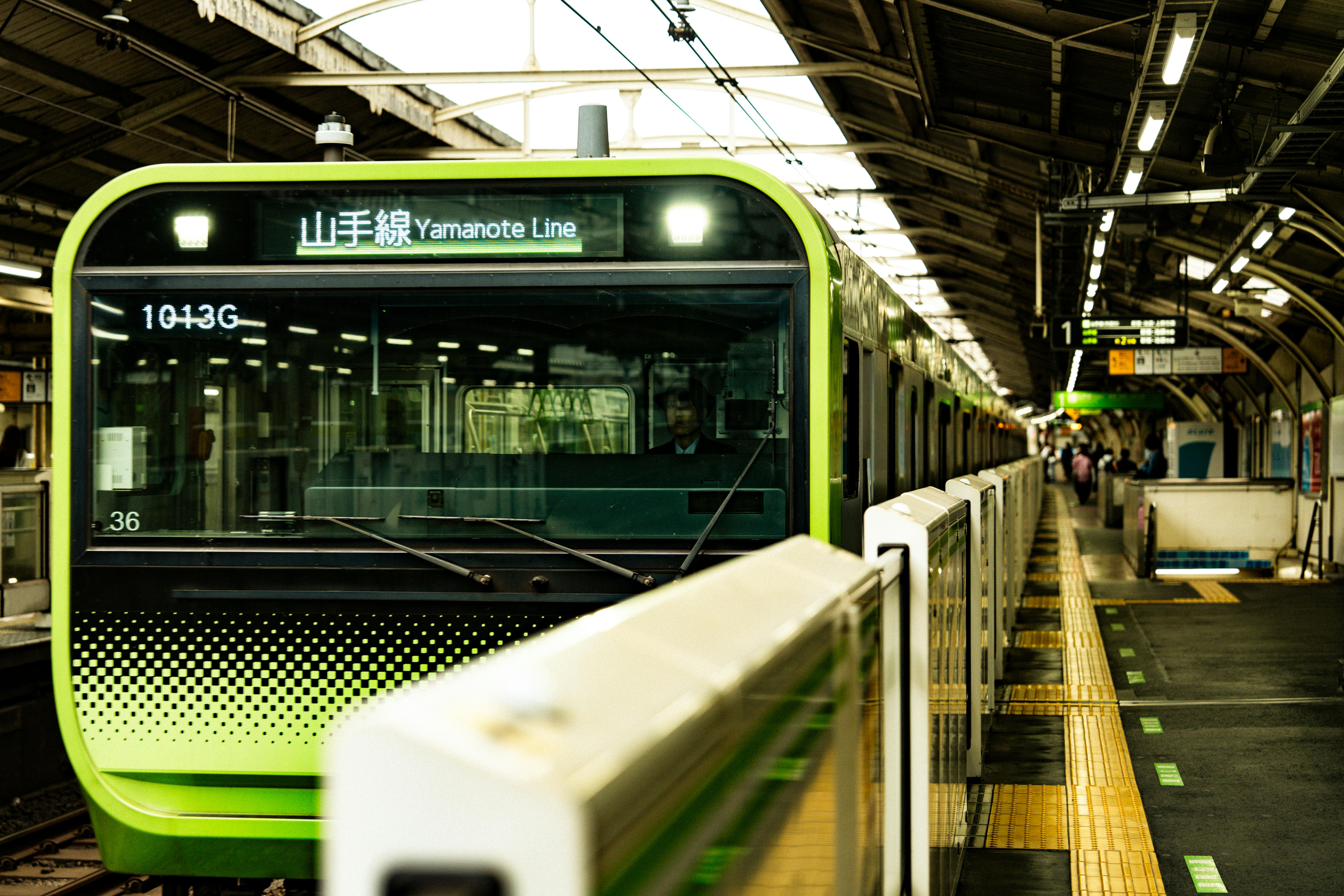
The Yamanote Line Premium
The JR Yamanote Line connects all major Tokyo hubs - Shinjuku, Shibuya, Tokyo Station, Ikebukuro, Shinagawa, and Ueno - creating unmatched accessibility. However, rent varies significantly by specific station:
- Highest rent: Shinjuku, Shibuya, Ebisu, Tokyo Station (¥150,000-¥200,000+ for 1K)
- Mid-range: Gotanda, Osaki, Ikebukuro (¥120,000-¥160,000 for 1K)
- Value stations: Tabata, Komagome, Nippori (¥90,000-¥130,000 for 1K)
Secondary Lines: Value Opportunities
Private railways (Seibu, Tobu, Odakyu, Tokyu) and feeder lines offer substantial savings - often ¥60,000-¥150,000 monthly compared to central line stations - in exchange for longer commutes and less frequent service.
Major terminals create intense rental demand in immediate vicinity. One station away escapes this premium while adding only 3-7 minutes to commutes. The monthly savings often translate to larger apartments or better building quality with minimal lifestyle impact.
Example calculation: A 1LDK in central Shinjuku rents for ¥220,000 monthly, while comparable space in Yoyogi costs ¥160,000.
Multi-Line Stations: Accessibility Sweet Spots
Stations served by multiple train lines offer particular value, providing redundancy during service disruptions, broader destination coverage, commute flexibility for job changes, and stable rental values over time.
Strategic Multi-Line Stations
Nakano (JR Chuo + Tokyo Metro Tozai): 5 minutes to Shinjuku, ¥30,000-¥50,000 lower rent than comparable Shinjuku apartments.
Iidabashi (5 lines): Excellent central Tokyo access with less commercial intensity than major hubs.
Akasaka-Mitsuke (Ginza + Marunouchi): Strategic central location, rent lower than immediate Akasaka or Roppongi.
Practical Guidance
Identify primary destinations: Choose lines providing efficient access to your workplace rather than general "central Tokyo" access.
Calculate total commute time: A property 8 minutes from a station with direct access may beat a property 3 minutes from a station requiring two transfers.
Test routes during rush hour: Experience your prospective commute during actual peak hours before committing.
Consider the one-stop strategy: Moving one station from ideal locations often provides the best balance of savings and convenience.
Evaluate lifestyle beyond commuting: If working remotely, optimize for neighborhood livability rather than premium station proximity.
Using Train Access to Your Advantage
In Tokyo, transit infrastructure fundamentally shapes real estate values and rental pricing. Residents willing to walk slightly farther, live one station from major hubs, or choose excellent secondary lines can achieve significant monthly savings - often ¥50,000-¥100,000 - while maintaining practical access to employment and amenities.
The key lies in conscious analysis: test actual commutes, calculate real savings, and honestly assess your priorities. Tokyo's comprehensive rail network creates numerous viable options - the challenge is identifying which combination of location, access, and cost best serves your circumstances.
Navigating Tokyo's rental market with train access in mind? Our team understands how station proximity and line quality affect rental values across Tokyo's neighborhoods. We can help you identify properties that optimize the balance between commute convenience and housing costs based on your specific work location, budget, and lifestyle priorities. Contact us to explore housing options that deliver the right combination of accessibility and value.


.jpg)


