

This guide serves non-residents, overseas investors, and future residents considering property purchase in Japan. Japan attracts foreign buyers through political and economic stability, transparent legal ownership rights, and straightforward property registration systems. This article walks through the complete purchase process from property search to ownership registration, clarifying legal requirements, necessary documentation, total costs, and common challenges non-resident buyers face.
Can Non-Residents Legally Buy Property in Japan?
Yes, non-residents can freely buy property in Japan without nationality or residency restrictions. Foreign nationals may purchase and own both land and buildings throughout Japan with the same legal rights as Japanese citizens.
What is not required for property ownership:
- Japanese citizenship
- Residency status or visa
- Japanese partner or company structure
Important distinction: Property ownership provides ownership rights but does not grant residency rights or visa eligibility. You own the property legally, but this ownership alone does not authorize you to live in Japan long-term.
How to Find Property in Japan as a Non-Resident
Non-resident buyers typically use three main search methods:
Working with licensed Japanese real estate agencies provides local expertise in pricing, neighborhood evaluation, and contract procedures. Licensed agencies navigate Japanese documentation and represent your interests through negotiations and closing.
Using Japanese property platforms like Suumo and AtHome allows direct browsing of available inventory. However, these platforms operate in Japanese and require local agency involvement for actual transactions.
Searching through international-focused agencies offers curated listings with English support, though inventory may be more limited than broader Japanese platforms.
Making an Offer and Securing the Property
The purchase process follows structured steps:
- Purchase application (買付申込書 / kaitsuke mōshikomisho) formalizes your offer to the seller, including proposed price, desired closing timeline, and any conditions. This application is not legally binding but demonstrates serious intent.
- Seller review involves the seller evaluating your offer against other potential buyers and deciding whether to accept, reject, or counter your proposal.
- Offer versus contract distinction: The application stage allows negotiation and withdrawal without penalty. The contract stage creates legally binding obligations with financial consequences for withdrawal.
- Common negotiation points include purchase price adjustments, closing timeline flexibility, property condition agreements, and inclusion or exclusion of fixtures and appliances.
Contract Signing and Legal Documentation
Once the seller accepts your offer, the formal contract process begins:
- Sales and Purchase Agreement (売買契約書 / baibai keiyakusho) represents the legally binding contract specifying all transaction terms, payment schedules, and closing procedures. Both parties sign this document with full legal commitment.
- Deposit payment typically equals 5-10% of purchase price and is paid at contract signing. This deposit shows your commitment and will be applied toward the final purchase price at closing.
- Certified interpreters can attend contract signing sessions to ensure non-Japanese speakers fully understand all terms and conditions before signing.
- Power of Attorney allows designated representatives to sign documents and complete transactions on your behalf if you cannot be physically present in Japan for closing procedures.
Documents Required for Non-Resident Buyers
Non-resident buyers must provide:
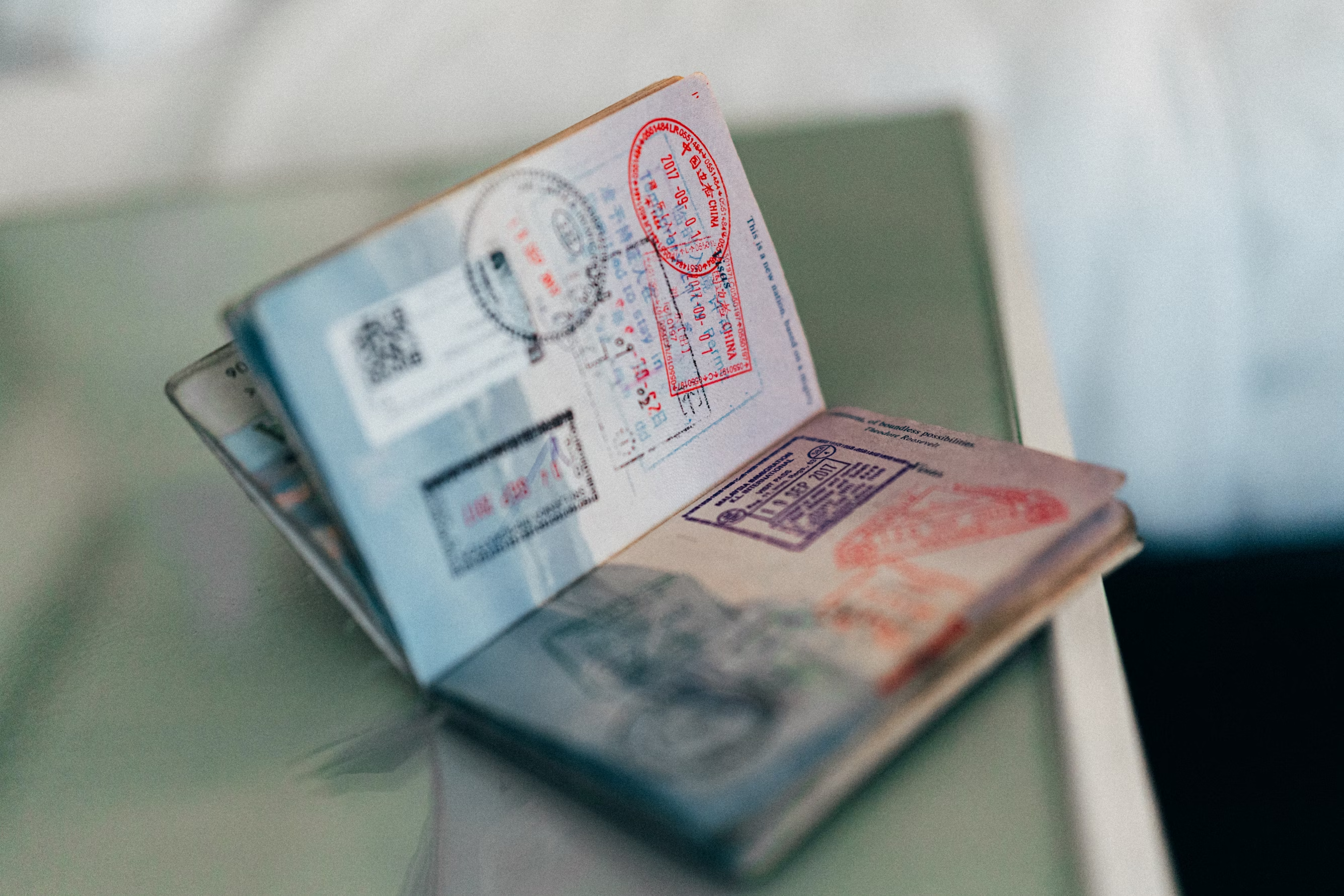
- Valid passport (identity verification)
- Proof of overseas address (official utility bill or bank statement)
- Power of Attorney documentation (if not attending closing in person)
- Personal seal (hanko) or legal signature authorization
- Additional documents requested by the judicial scrivener handling registration
Your real estate agency will specify exact requirements based on your situation and the property involved.
Total Costs of Buying Property in Japan
Understanding complete costs prevents unexpected financial requirements:
Property purchase price typically requires full cash payment. Japanese banks rarely provide mortgages to non-resident buyers without substantial additional requirements.
Registration and license tax costs approximately 2% of property value for ownership transfer registration.
Real estate acquisition tax (不動産取得税) is a one-time tax assessed after purchase, typically 3-4% of assessed property value.
Annual fixed asset tax (固定資産税) continues throughout ownership, averaging 1.4% of assessed property value annually.
Real estate agent fee equals approximately 3% of purchase price plus consumption tax, compensating the agency for services rendered.
Judicial scrivener fees cover the legal professional who handles ownership registration, typically ¥100,000-¥300,000 depending on transaction complexity.
Total transaction costs beyond purchase price typically equal 6-10% of property value.
Ownership Registration and Completion
Official ownership transfer occurs through formal registration:
The Legal Affairs Bureau (法務局 / hōmukyoku) maintains Japan's property registry. Ownership becomes official only upon registration with this government office.
Judicial scrivener process involves a licensed legal professional preparing and filing registration documents, verifying all paperwork accuracy, and ensuring proper ownership transfer recording.
Timeline from contract to ownership typically spans 1-2 months, allowing time for document preparation, payment processing, and registration completion.
Keys and possession transfer occurs after registration completes and final payment clears, typically at a formal handover meeting attended by both parties.
Does Buying Property in Japan Grant Residency or a Visa?
No, property ownership does not provide visa rights or residency status. This is crucial to understand before purchasing.
What property owners can do:
- Visit Japan on standard tourist visas or visa-exempt entry (typically 90 days)
- Stay in their property during authorized visits
- Rent the property to tenants and earn rental income
What property owners must do:
- File Japanese tax returns if earning rental income
- Pay annual property taxes regardless of residency status
- Maintain the property to local standards
- Comply with all ownership obligations despite living abroad
If you want to live in Japan long-term, you must obtain appropriate visa status through employment, marriage, investment business operations, or other qualifying categories independent of property ownership.
Renting Out Your Property as a Non-Resident
Non-resident owners may rent their properties and earn income, subject to Japanese tax obligations.
Rental income taxation requires filing Japanese tax returns and paying tax on rental income earned from Japanese property, typically 20.42% withholding tax on gross rental income for non-residents.
Property management services become essential for non-resident landlords who cannot personally manage tenant relations, maintenance, and rent collection from overseas.
Passive income considerations include evaluating whether rental income after taxes, management fees, and maintenance costs provides satisfactory returns given the capital invested and ongoing obligations.
How We Support Non-Resident Buyers
Tokyo Housing provides comprehensive support designed specifically for non-resident purchasers:
Property sourcing and evaluation includes identifying properties matching your investment criteria, conducting market analysis, and evaluating neighborhood potential and property condition.
English-language support ensures clear communication throughout the transaction, with bilingual staff explaining all procedures, translating documents, and clarifying Japanese real estate terminology.
Contract coordination and interpretation involves arranging certified interpreters for contract signing, explaining all terms and conditions clearly, and ensuring you understand your obligations before committing.
Post-purchase guidance continues after closing with assistance on tax filing requirements, property management arrangements, rental strategy development, and ongoing ownership obligations.
Our experience with non-resident buyers means we anticipate challenges before they arise and structure transactions to minimize complications while protecting your interests throughout the process.
Buying Property in Japan With Confidence
Japan welcomes foreign property buyers with transparent legal frameworks, clear ownership rights, and structured transaction processes. Non-residents face no nationality-based restrictions and enjoy the same legal protections as Japanese buyers once ownership registration completes.
The process requires understanding unique Japanese procedures, preparing appropriate documentation, budgeting for complete transaction costs beyond purchase price, and recognizing that property ownership provides investment rights but not residency rights. These realities are manageable with proper preparation and professional guidance.
Most importantly, working with experienced professionals who understand both Japanese real estate practices and international buyer needs makes the difference between smooth transactions and frustrating complications. The investment in proper agency support, legal services, and ongoing management infrastructure protects your capital and ensures your Japanese property functions as intended whether for future personal use or current rental income.

.jpg)


