
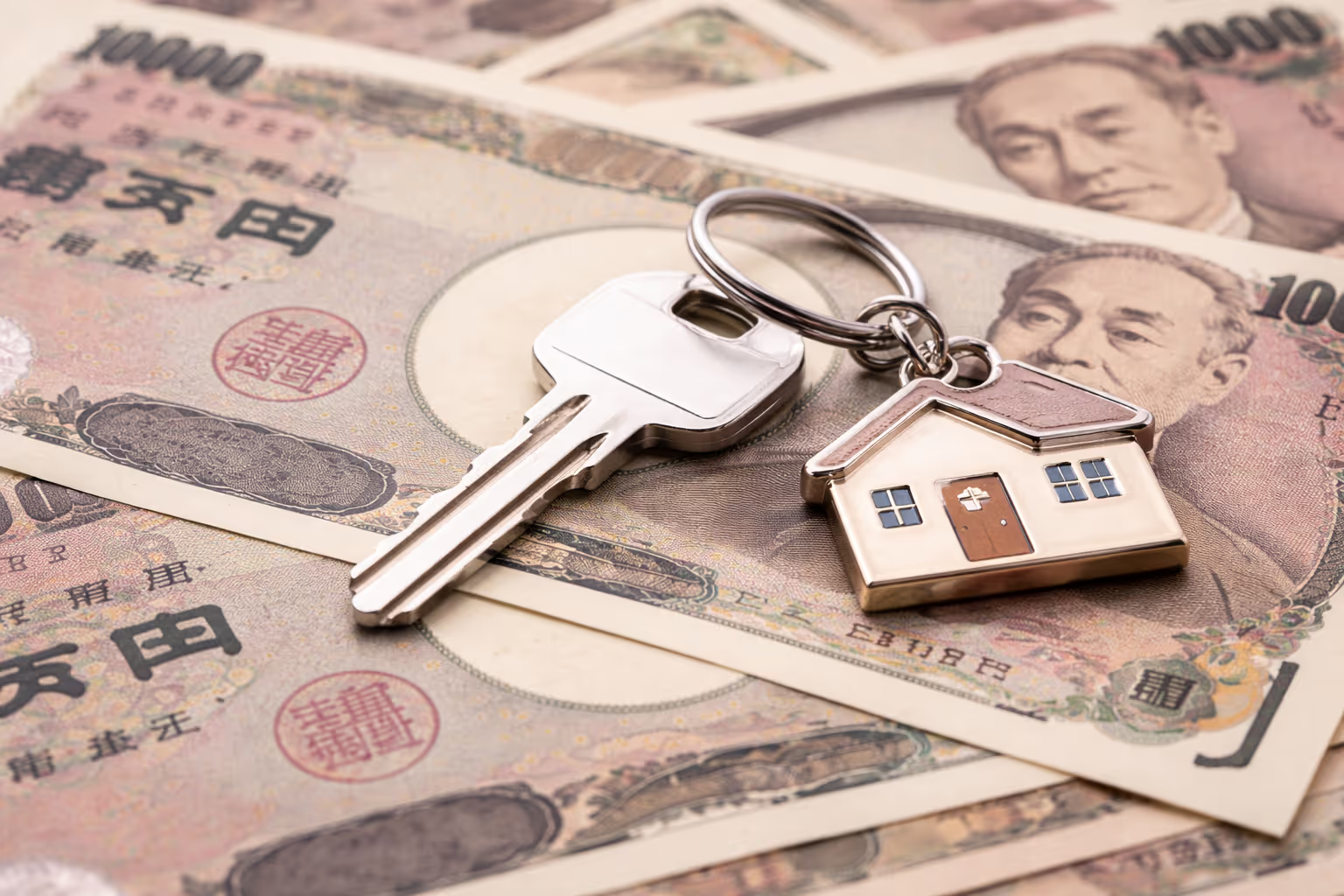
Key money, known in Japanese as 礼金 (reikin), is a non-refundable payment made to the landlord at the start of a rental contract. Unlike a deposit, it is not held for damages and is not returned at move-out.
Today, key money typically ranges from 0 to 2 months’ rent, depending on the property, area, and landlord preference.
Why Did Key Money Exist in the First Place? (Historical Background)
Key money did not originate as a random fee.
Its roots trace back to post-World War II Japan, during a period of:
- Severe housing shortages
- Large population displacement
- Rapid urban rebuilding
At the time, landlords held scarce and valuable housing assets. Key money emerged as a gesture of gratitude rather than a contractual obligation - a way for tenants to thank landlords for providing accommodation when demand far exceeded supply.
Over time, this custom became institutionalized into the rental system.
How a Cultural Practice Became a Standard Fee
As Japan’s rental market stabilized, key money evolved from a voluntary thank-you Into a standardized contractual requirement
By the late 20th century, key money was commonly expected, particularly in:
- Central Tokyo
- Newer buildings
- High-demand neighborhoods
Even as housing supply improved, the practice remained - not due to necessity, but tradition and landlord leverage.
Why Does Key Money Still Exist Today?
Key money persists for three main reasons:
1. Market Dynamics
In competitive rental areas, landlords can still require it without losing applicants.
2. Risk Offset
Key money acts as a buffer against vacancy risk and early termination.
3. Institutional Inertia
Rental customs in Japan change slowly. Once a fee becomes normalized, it tends to remain unless market pressure removes it.
When Is Key Money Required Today?
Key money is not universal anymore.
It is more commonly required when:
- The property is newly built
- The location is highly desirable
- The landlord is an individual rather than a corporation
- Demand is strong and vacancy is low
It is often not required for:
- Older buildings
- Corporate-managed properties
- Promotional listings
- Properties competing in softer markets
Is Key Money Unique to Japan?
Japan is one of the few countries where non-refundable landlord gratitude payments are still common.
Comparable practices elsewhere:
- South Korea: Large refundable deposits (Jeonse), but no key money
- France / Germany: Security deposits only, strictly regulated
- United States: Deposits and fees, but no landlord gratuity
- United Kingdom: Deposits capped by law
Japan stands out for preserving a cultural-origin fee rather than a purely financial one.
Is Key Money Mandatory?
No. Key money is property-specific, not legally required. Two apartments in the same building can even have different conditions depending on landlord decisions.
This is why professional agents focus on:
- Identifying no-key-money options
- Comparing total upfront costs, not just rent
- Advising when paying key money may still be strategically reasonable
The Modern Reality: Key Money Is Declining
Over the past decade, key money has steadily decreased, especially in:
- Outer Tokyo wards
- High-supply residential areas
- Listings targeting international renters
However, it has not disappeared - especially in premium locations.
Key money is not a scam, nor is it a legal requirement. It is a historical artifact that survived into modern Japan due to tradition and market leverage. Understanding why it exists helps renters make informed decisions - instead of emotional ones.


.jpg)


